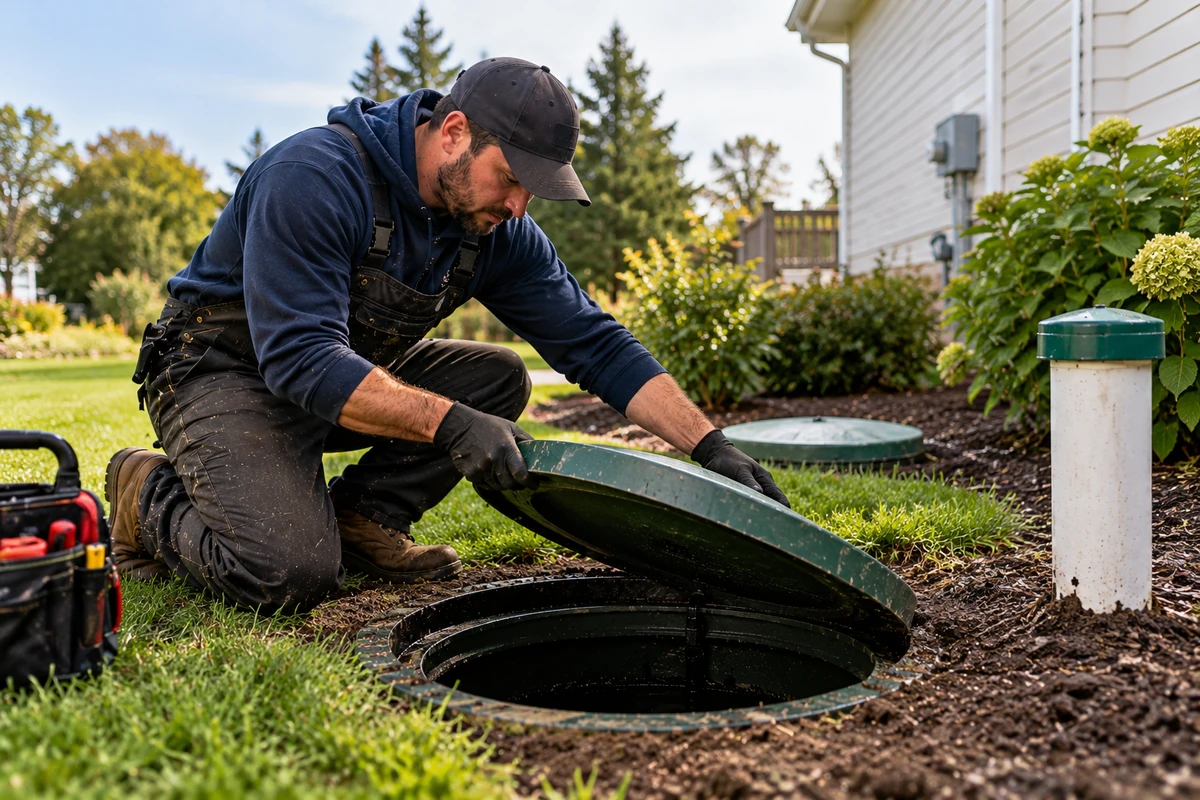
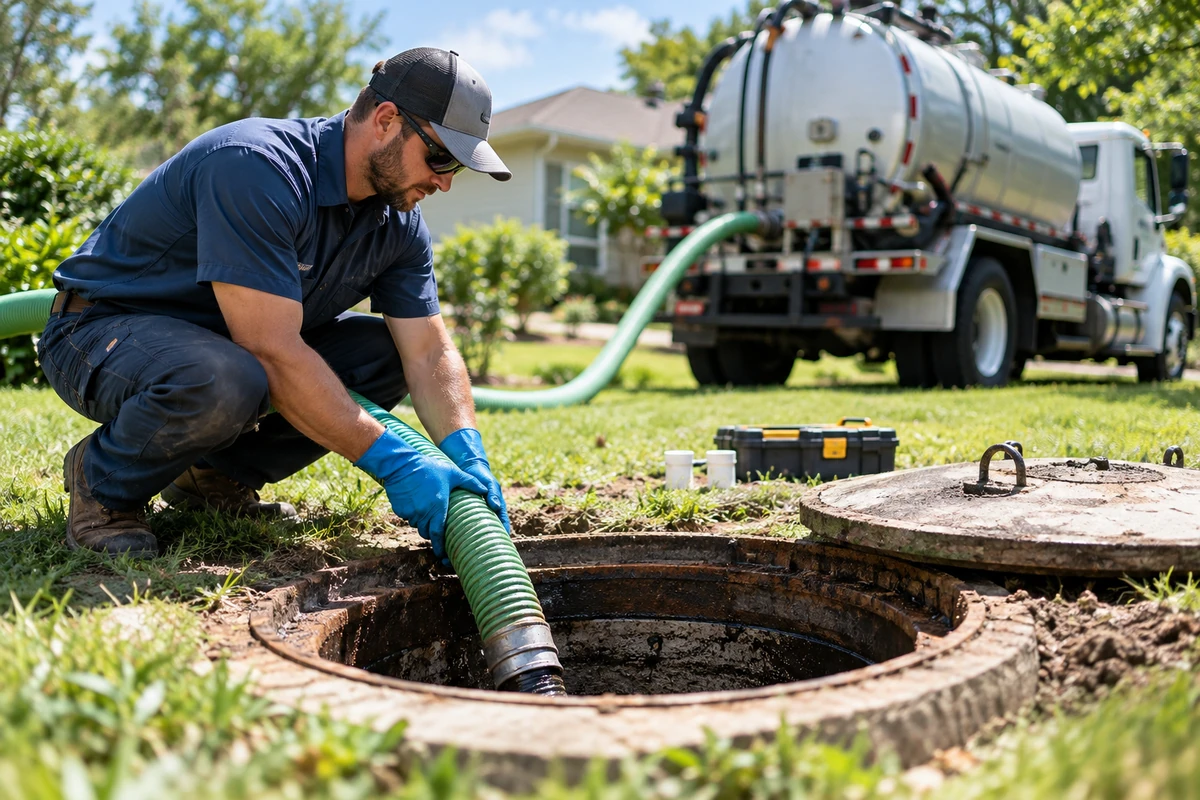
What Septic Line Inspection and Cleaning Covers
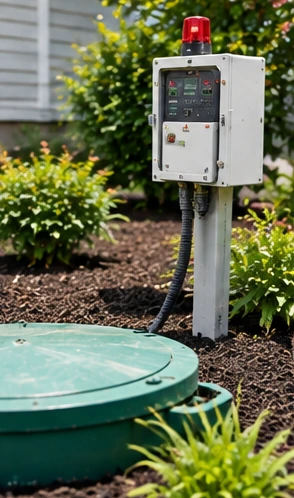
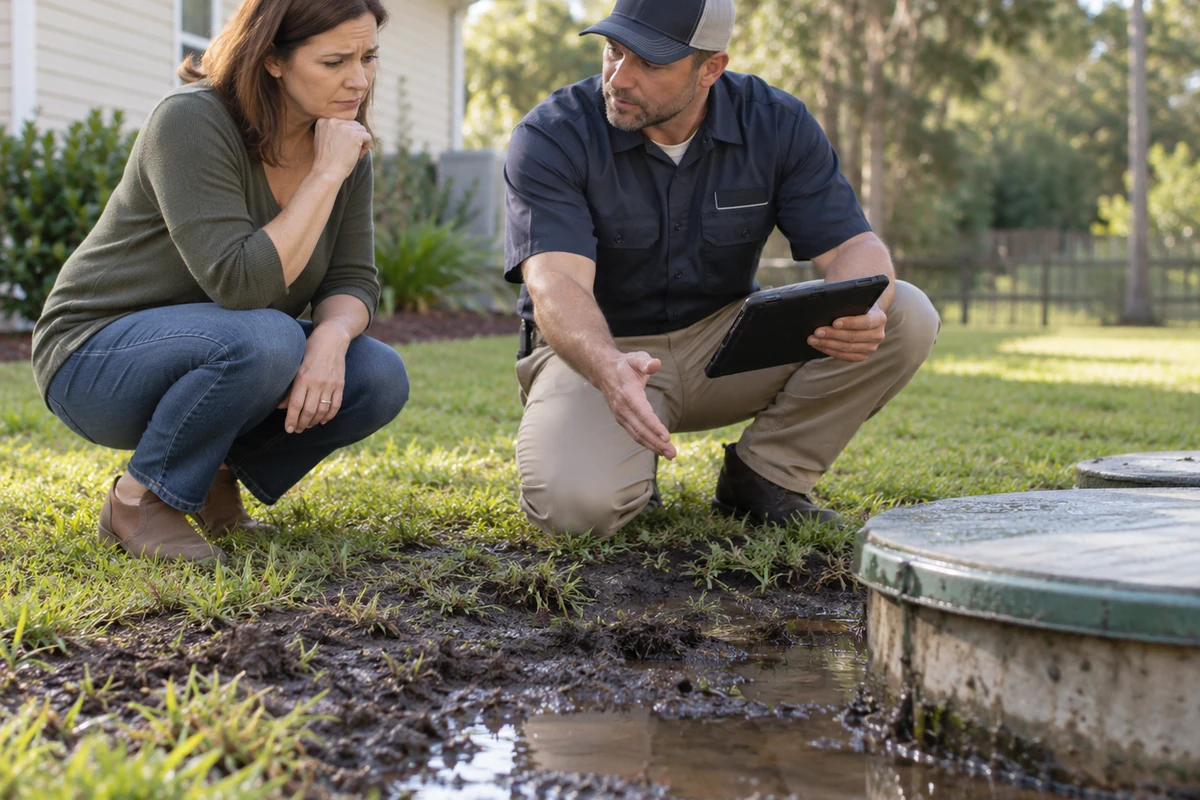
The building sewer runs from the structure toward the septic tank. The septic inlet line enters the tank at its inlet opening. Some systems also have serviceable effluent or distribution piping after the tank. Each segment has a different purpose, access point and cleaning limit. The first step is to identify which pipe is being inspected rather than assume every buried line is part of the same route.
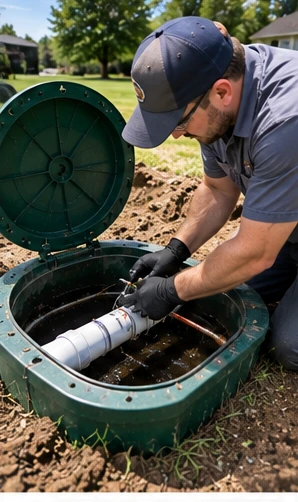
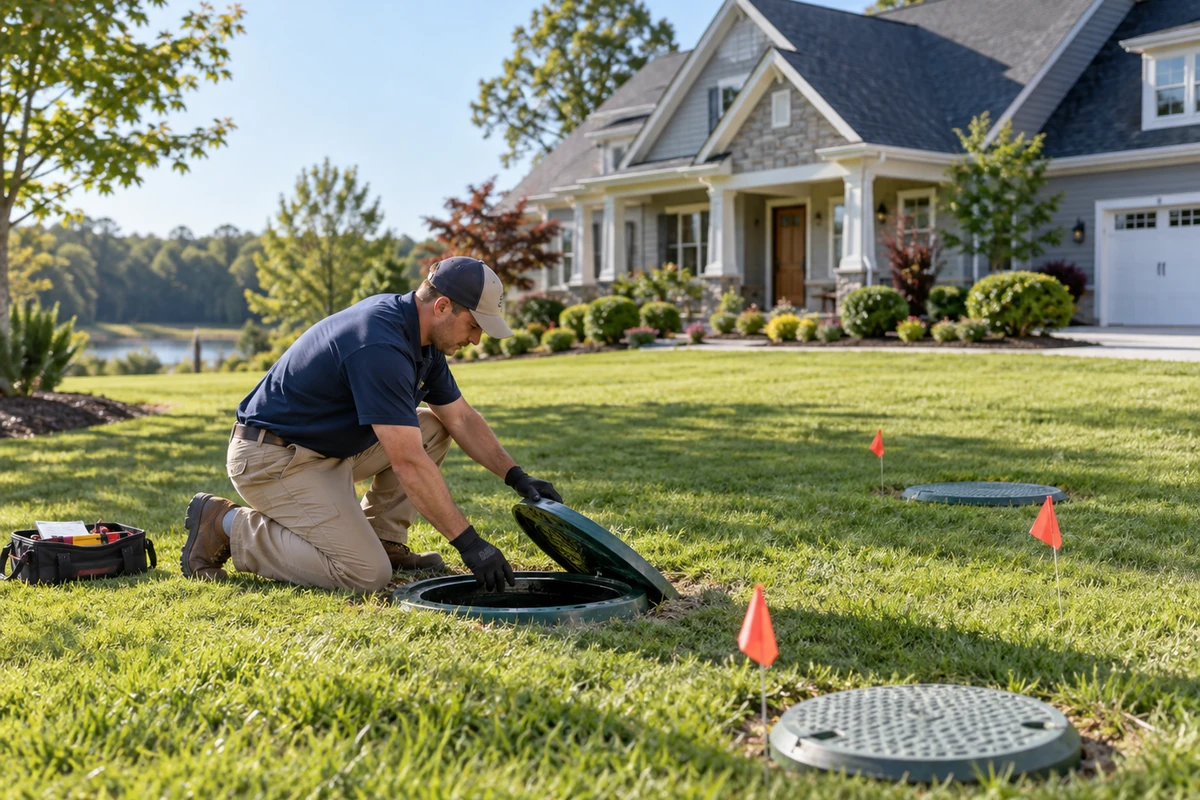
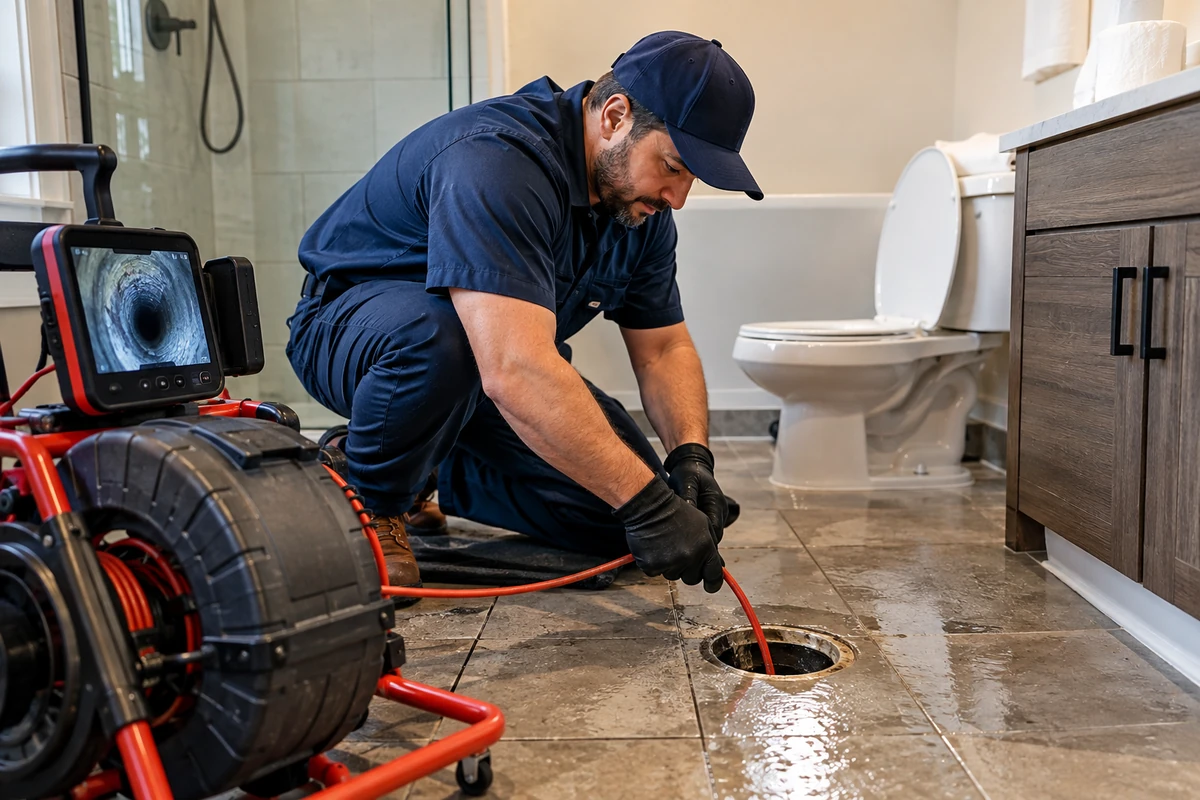
When offered and suitable, a sewer camera can enter through a cleanout or another approved access point to show the interior of accessible piping. A transmitter attached to the camera head can help a locator trace its direction and approximate position from the surface. Recording and report tools can document visible roots, grease, scale, standing water, an offset joint, a damaged section, a change in pipe material or the tank inlet.
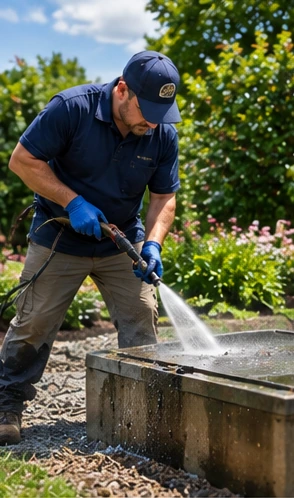
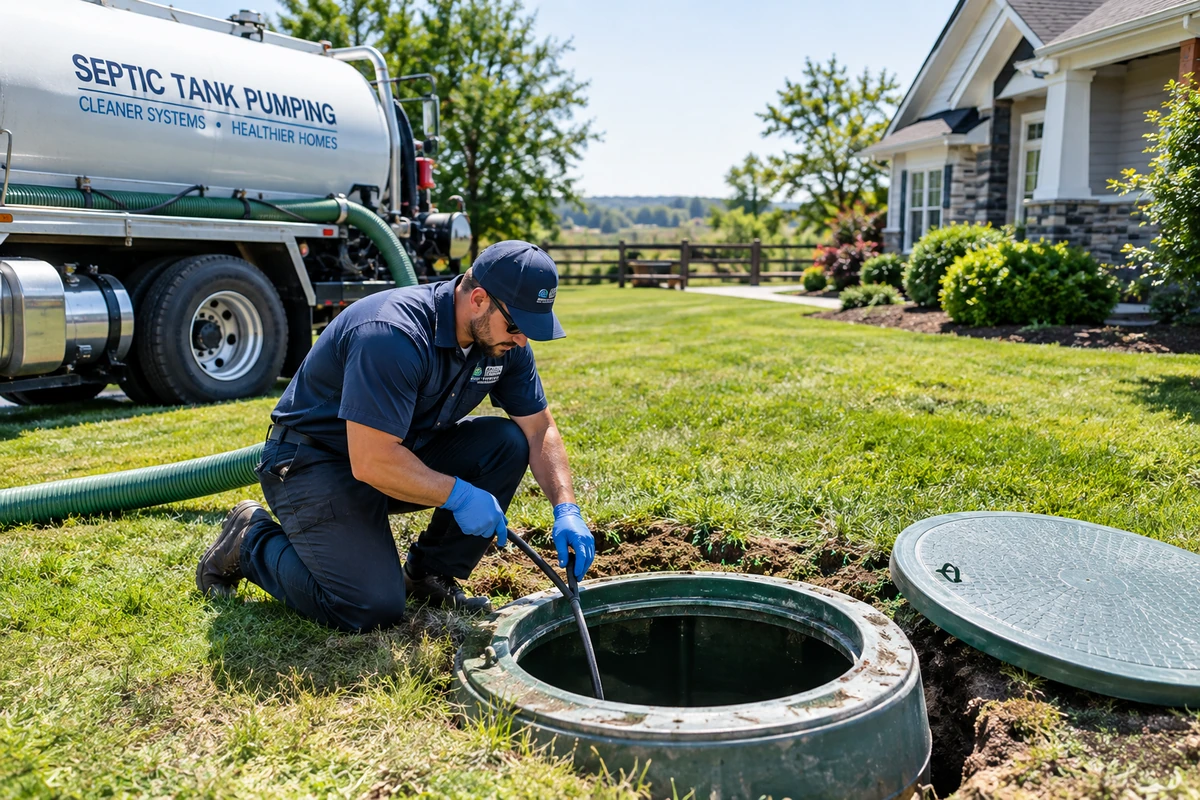
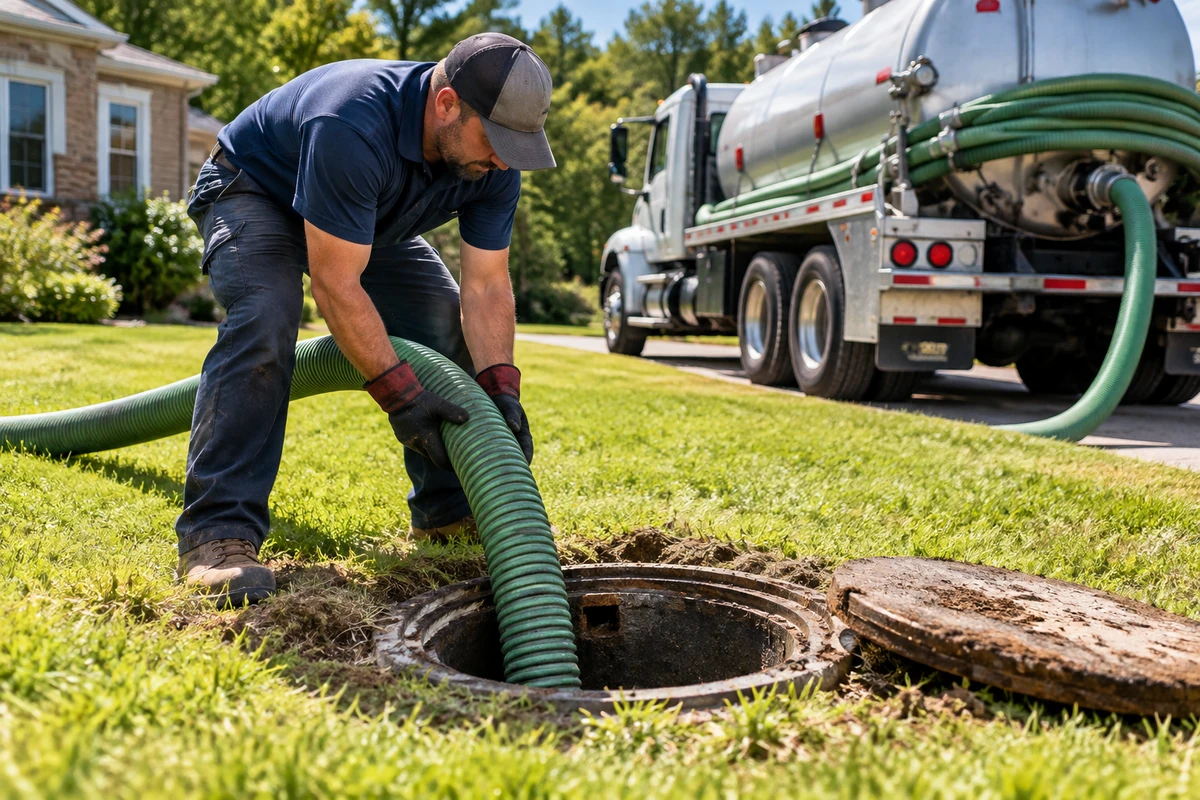
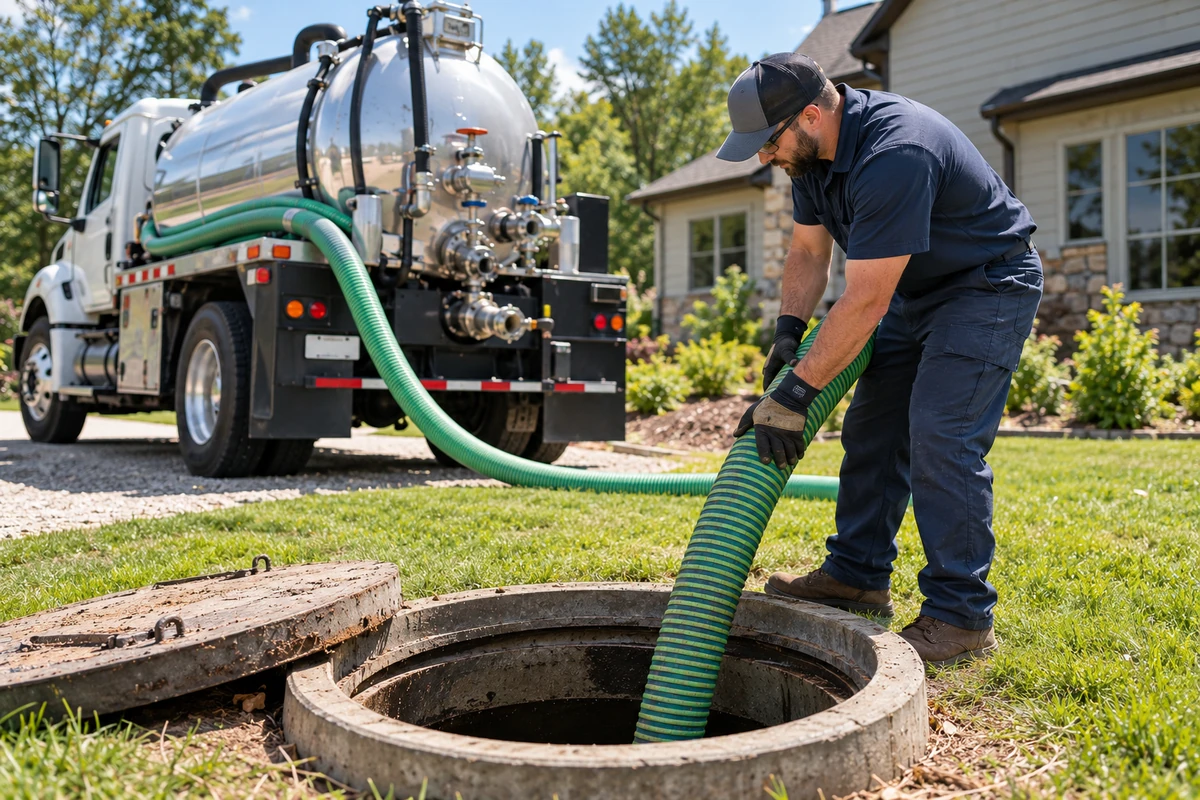
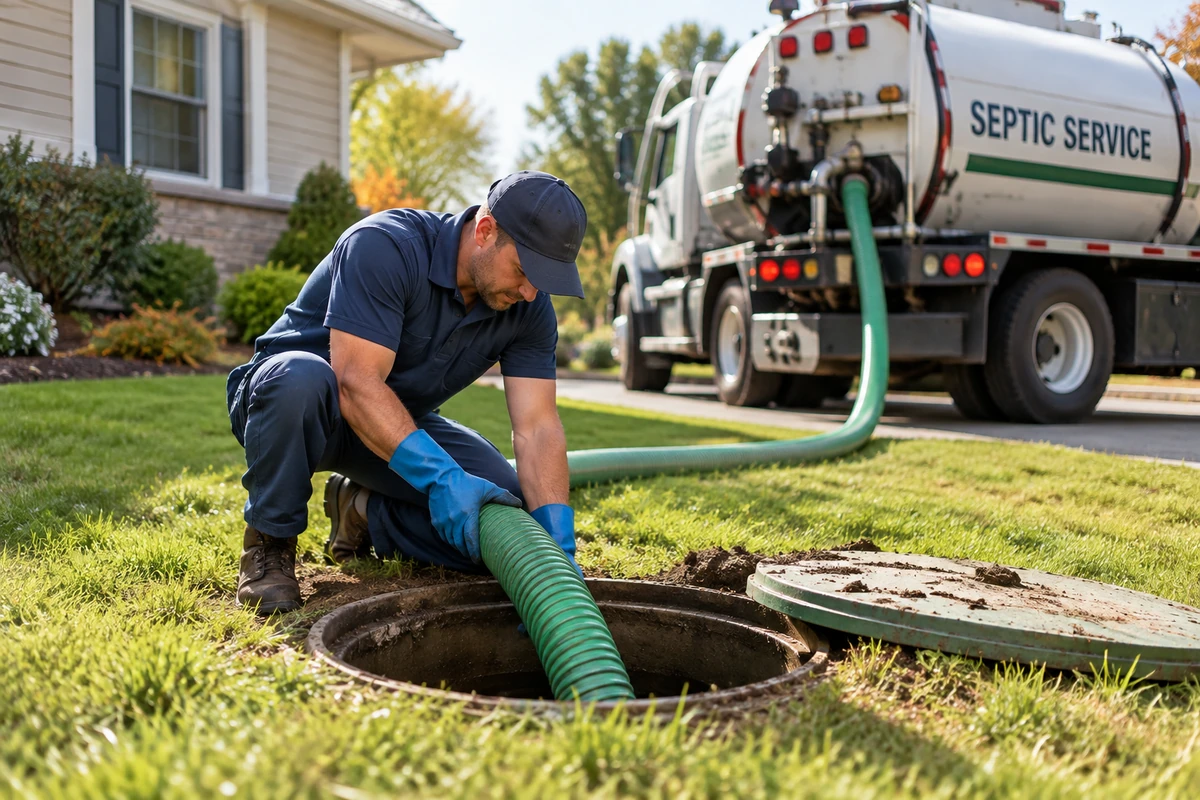
Cleaning may use mechanical tools or appropriate jetting equipment selected for the pipe material, diameter, access and blockage. The goal is to restore a safe flow path and collect or control removed material. Debris should not simply be driven into the tank, outlet or soil absorption area. A cleanout, tank access and receiving point may need to be coordinated before work begins.
This service does not let a camera directly evaluate soil absorption. It cannot prove the condition of every drainfield lateral, and it does not repair a broken pipe, failed tank, damaged baffle or saturated drainfield. Accessible distribution piping may be inspected only when the system design and entry point allow it. Structural repair, excavation, pumping and drainfield diagnosis remain separate scopes.
Signs You May Need Septic Line Inspection or Cleaning
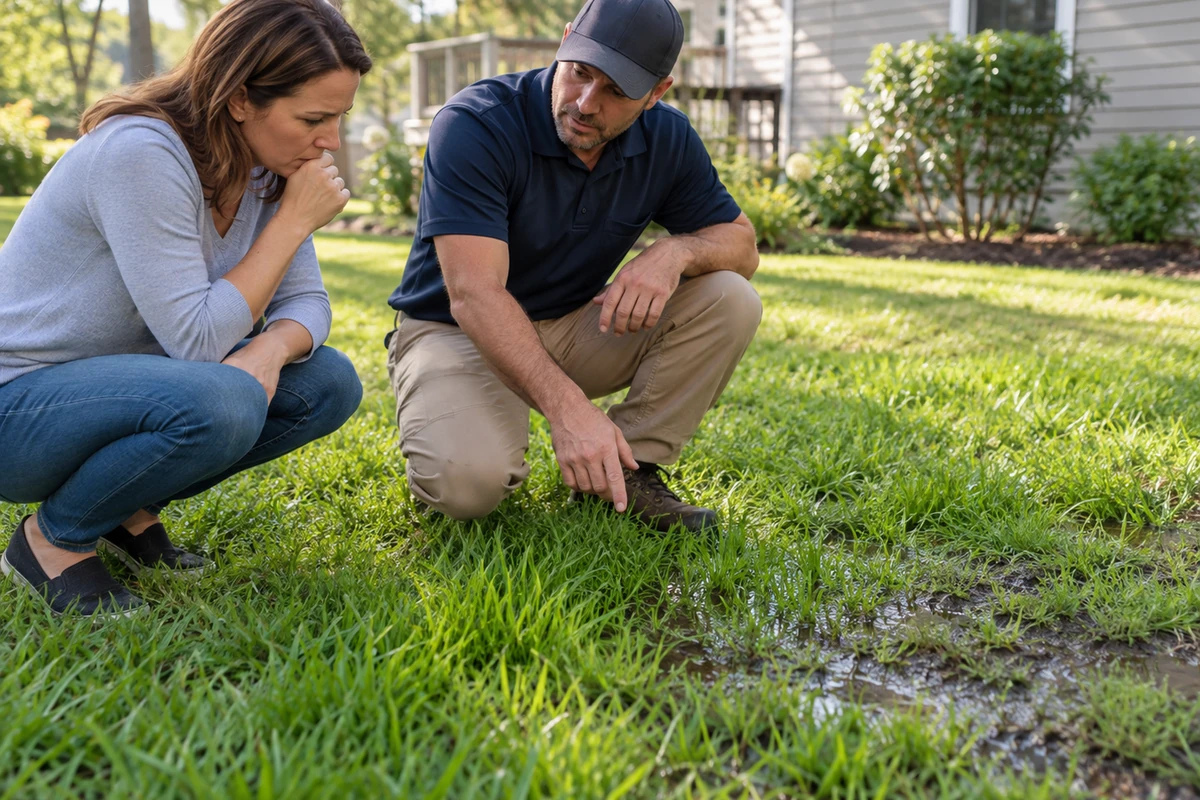
Line service is useful when symptoms point toward a pipe restriction or damage but the exact cause remains uncertain. Common triggers include:
Several fixtures drain slowly or back up at the same time.
Wastewater returns at a low fixture when other plumbing is used.
The building cleanout shows standing wastewater or repeated blockage.
The tank level is normal, but wastewater does not reach the inlet as expected.
A blockage returns soon after ordinary snaking or clearing.
Root growth, settlement or previous excavation is suspected along the pipe route.
A property record, remodeling project or repair requires the line path to be confirmed.
These symptoms do not guarantee a line blockage. A full tank, outlet restriction, pump problem or saturated soil treatment area can slow wastewater movement. One slow sink may involve only a fixture branch inside the building. Inspection should establish the affected segment and system condition before aggressive cleaning is selected.
Common Causes of Septic Line Problems
Solids, grease, wipes and other unsuitable material can collect in the building sewer or at a change in direction. Low spots may hold wastewater and allow deposits to build. A pipe with insufficient slope can repeatedly lose carrying velocity. Older joints, rough interior surfaces and changes in pipe material can also catch debris even when the tank itself is operating normally.
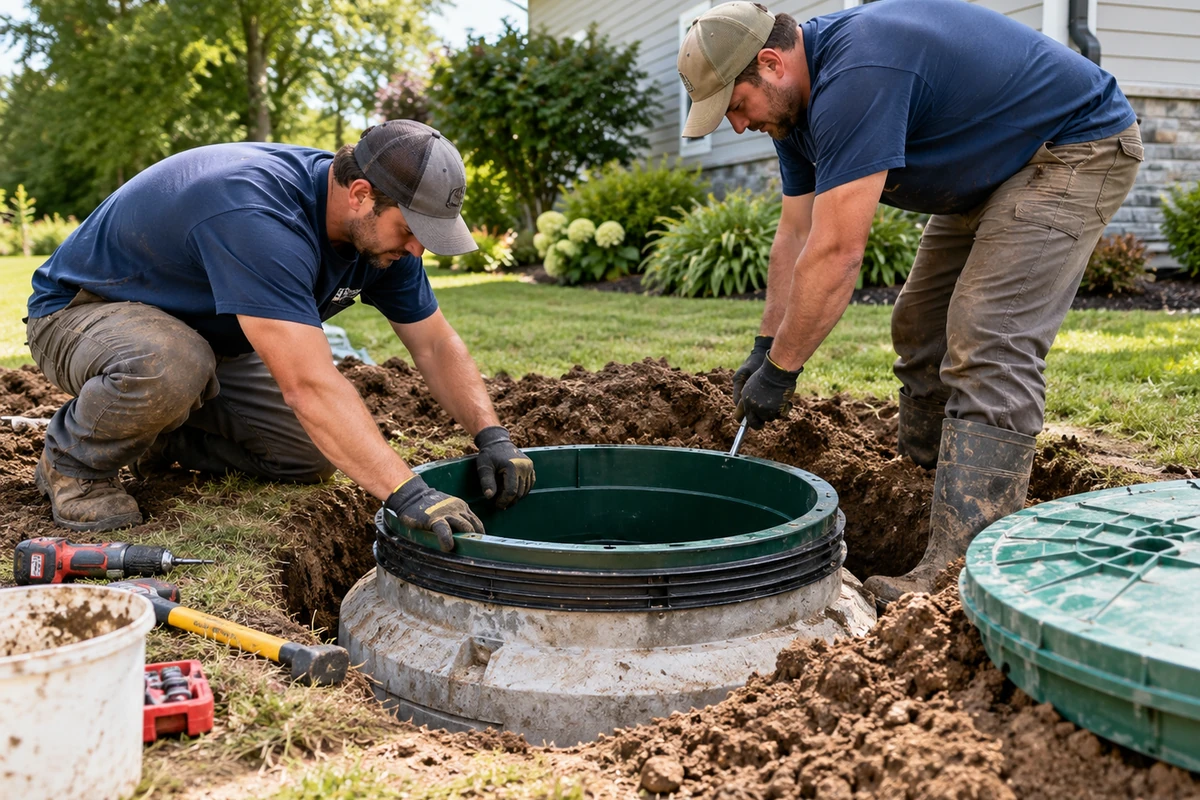
Roots enter through an existing opening such as a cracked pipe, separated joint or failed connection. Cutting the roots can restore temporary flow, but it does not close the opening. Repeated root growth is evidence that the line may need repair. Settlement, vehicle loading, freeze-thaw movement and earlier excavation can create offsets, bellies, deformation or complete breaks that cleaning cannot correct.
Access and system layout affect the problem. A missing or poorly located cleanout can limit camera travel and tool control. Tight bends, diameter changes and submerged pipe sections can stop the camera before the suspected area. The tank inlet baffle may also restrict entry from the tank side. A clear image of one segment should not be described as proof that every system line is open.
How Our Septic Line Service Process Works
1 Verify the System and Affected Line
We review the reported symptoms, fixture pattern, cleanout location, tank position, recent pumping and known records. The starting point identifies whether the likely concern is the building sewer, septic inlet line or another accessible system pipe.
2 Inspect and Diagnose
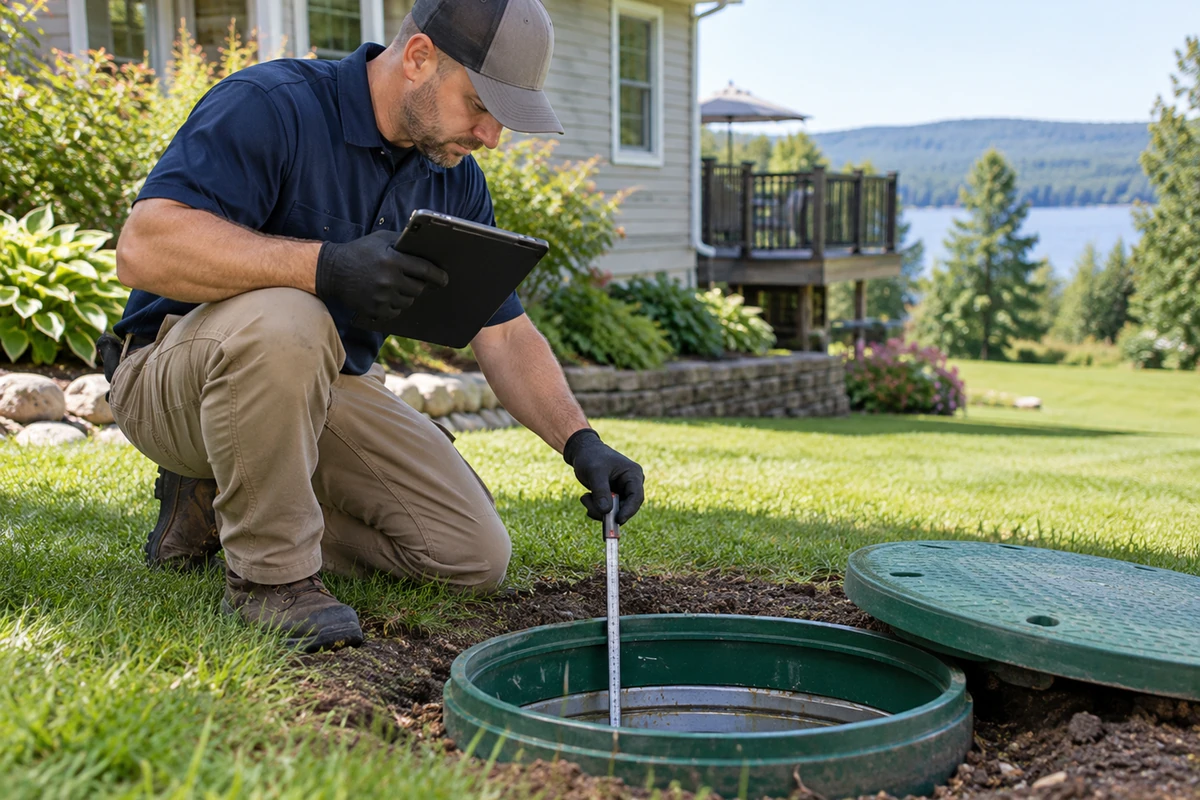
The accessible route, wastewater level and site conditions are checked. A sewer camera and transmitter, locator, mechanical cleaning tools or appropriate jetting equipment are used only when offered and suitable. Protective equipment and controlled access remain part of the setup.
3 Explain the Findings
We identify the visible blockage, roots, standing water, offset, break or access limit and separate confirmed evidence from interpretation. Camera distance and surface location help define where the finding sits, but buried depth and route remain subject to site and equipment limits.
4 Approve the Work Scope
The agreed plan identifies the pipe segment, cleaning method, access point and receiving or debris-control approach. It also separates cleaning from pumping, excavation, pipe repair, tank work or drainfield evaluation when those services are needed.
5 Complete the Agreed Cleaning
Mechanical cleaning or controlled jetting is matched to the confirmed pipe and obstruction. Tool choice, flow and direction should protect the tank, inlet components and downstream soil treatment system. A broken or unsafe pipe is not forced through merely to claim that it was cleared.
6 Verify and Document
The serviceable segment is checked again for observable flow and remaining obstruction. The record notes access points, camera reach, visible conditions, cleaning performed, location information, unresolved damage and the next appropriate repair or diagnostic step.
Line Cleaning, System Protection and Regulatory Limits
Kentucky's onsite-system component standards treat piping, fittings, valves and distribution devices as system components. Work that changes an onsite component differs from ordinary cleaning. Kentucky's onsite sewage disposal regulation addresses permits for construction, installation and alteration, so a confirmed break or system modification may move the job into a permitted repair scope.
The Northern Kentucky Health Department provides septic oversight in Boone, Campbell, Grant and Kenton counties and directs repairs or alterations through its repair process. The EPA's septic-care guidance also advises keeping grease, wipes, harmful chemicals and other unsuitable waste out of septic systems. Cleaning should correct a serviceable pipe problem without hiding the source of repeated blockage.
What Affects Septic Line Inspection and Cleaning Cost
Cost depends on the affected segment, access, cleanout condition, camera reach, pipe diameter and material, blockage type, number of entry points, tool choice, cleaning time, recording needs and travel. A reachable soft blockage differs from deep roots, a long line, a buried cleanout or a pipe that must first be located.
Tank pumping, hard-surface access, excavation, pipe repair, replacement fittings and drainfield diagnosis can add separate work. Camera inspection may also stop before the target when bends, wastewater or damage block travel. A Covington price range should be published only after current provider quotes or completed jobs support it.
Related Septic Line Services
For camera-led pipe diagnosis and locating, see Septic Line Camera Inspection Covington.
For blockage and root removal in the inlet route, see Septic Inlet Line & Root Cleaning Covington.
For the site's primary pumping topic, see Septic Tank Pumping Covington KY.
For broader service and system answers, review Septic Service FAQs.
Service Areas Near Covington
Covington and Kenton County are the location focus. Line inspection or cleaning may also be relevant in South Covington, Independence, Taylor Mill, Ryland Heights, Morning View, Piner, Kenton, Walton, Burlington, Union, Alexandria, Crittenden, Williamstown and Falmouth. Proximity does not confirm coverage. Access, system type, travel limits and availability must be verified for each property.
Use Areas We Serve Near Covington to review the location directory and applicable coverage details.
Frequently Asked Questions
Can a camera inspect every part of a septic system?
No. A camera can inspect accessible piping, but it cannot directly evaluate soil absorption and may not reach every drainfield lateral. The scope should identify which line segments are accessible.
Can hydro jetting be used on a septic line?
It may be appropriate for certain accessible pipes when the technician controls the flow and protects the tank and drainfield. It is not a treatment for failed soil absorption.
What happens if roots are found in the septic inlet line?
Roots can be removed from some accessible lines, but the opening that allowed entry may require pipe repair to prevent recurrence.
How much does septic line inspection & cleaning covington cost?
The cost of septic line inspection & cleaning covington depends on system size, access, depth, condition, travel, equipment, and any additional diagnosis or repair. Publish a local range only after it is supported by current provider quotes or completed jobs.
Where is septic line inspection & cleaning covington available?
Septic Line Inspection & Cleaning Covington is available only within the operating provider's confirmed service territory. The final page must name the exact covered communities and explain any travel or scheduling limits before publication.