
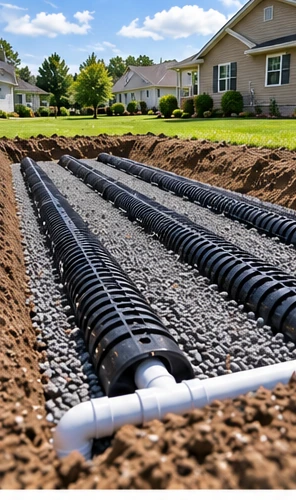
The basic path is simple: building drains, main sewer pipe, septic tank, outlet protection, distribution piping, drainfield, and soil. Gravity moves wastewater through many systems. Properties with challenging elevation, soil, groundwater, or treatment requirements may use pumps, controls, timed dosing, aerobic treatment, sand filters, mounds, or other approved components.
System Overview
Every shower, toilet, sink, washing machine, and other connected fixture sends wastewater toward the same onsite system. A properly designed system slows the flow in the tank, keeps most solids from reaching the field, spreads effluent across the approved absorption area, and provides contact with soil microorganisms. The design is matched to the property, expected flow, soil, slope, available area, and local requirements.
| System stage | Main job | What can interfere |
| Building sewer | Carries wastewater from the structure to the tank. | Roots, settlement, grease, wipes, or damaged pipe |
| Septic tank | Separates sludge, scum, and liquid effluent. | Excess solids, leaks, damaged baffles, or high flow |
| Outlet protection | Reduces solids leaving the tank. | Broken tee, missing baffle, or clogged filter |
| Distribution | Moves effluent into the approved drainfield area. | Uneven flow, blockage, pump failure, or damaged box |
| Drainfield and soil | Treat and disperse effluent below ground. | Hydraulic overload, compaction, roots, or saturated soil |
From the House to the Tank
Wastewater leaves the building through one main drainage pipe, often called the building sewer. The pipe needs a sound route and suitable slope so flow reaches the tank without repeated blockage. A problem in this pipe can imitate a full tank because several indoor fixtures may slow or back up at once. Pumping the tank does not repair a broken or root-damaged building sewer.
At the tank inlet, a baffle or sanitary tee directs incoming flow downward. This reduces disturbance at the surface and helps keep the floating scum layer from moving backward into the inlet. Wastewater stays in the watertight tank long enough for physical separation and limited biological breakdown. The tank remains filled to its normal operating level; each new inflow displaces a similar volume of effluent toward the outlet.
How Solids and Scum Separate
Heavier material settles to the bottom and forms sludge. Oils, grease, and other lighter material rise and create a scum layer. The liquid zone between those layers contains effluent that can leave the tank. Naturally occurring microorganisms digest part of the organic matter, but they do not make every solid disappear. Sludge and scum continue to accumulate and eventually require pumping.
Separation depends on time and calm conditions. Large surges of water can shorten the holding time and disturb settled material. Garbage-disposal use adds solids. Wipes and other non-flushable items may clog piping or remain in the tank. This is why efficient water use, suitable pumping intervals, and flushing only human waste and toilet paper protect more than the tank itself.
What Baffles and Filters Do
Inlet and outlet baffles or tees control how wastewater enters and leaves the tank. The outlet tee draws liquid from the clearer middle zone instead of the scum at the surface or sludge at the bottom. EPA guidance explains that this T-shaped outlet helps prevent sludge and scum from traveling into the drainfield. A cracked, detached, or missing outlet component increases downstream risk.
Some tanks also have an effluent filter at the outlet. The filter captures additional suspended solids before the effluent reaches distribution piping. It needs safe access and periodic cleaning according to the system design and service findings. A clogged filter can slow wastewater movement or raise the tank level, while removing it without correction exposes the field to more solids.
How Effluent Reaches the Drainfield
After leaving the tank, effluent may flow by gravity to a distribution box, header, or network of perforated pipes. The distribution components should spread flow across the intended drainfield instead of sending most wastewater to one small area. Trenches may contain gravel and pipe, chambers, or another approved dispersal product. The specific layout belongs to the permitted design for the site.
A distribution box that settles, a blocked lateral, or crushed piping can create uneven loading. One part of the field may become saturated while another receives little flow. The surface can still look normal during early problems because the treatment area is underground. Records, inspection points, tank observations, and visible field conditions help trace how effluent is moving.
Soil Treatment and Biomat
The drainfield releases pretreated effluent into unsaturated soil. Soil particles, pore spaces, and microorganisms provide additional physical, biological, and chemical treatment as water moves downward and outward. The EPA describes the soil as accepting, treating, and dispersing wastewater while helping remove harmful bacteria, viruses, and nutrients before the water reaches groundwater.
A biological layer called biomat develops where effluent meets the soil, commonly along the bottom and sides of trenches. This active layer contributes to treatment and also slows infiltration. Balanced loading allows air and resting periods to support treatment. Excess solids or too much water can thicken the biomat, reduce infiltration, and contribute to ponding, wet ground, or backup. Pumping protects the field by keeping accumulated tank solids away from the outlet.
How Pumps and Alternative Systems Differ
Not every property can rely on gravity and a conventional field. A pump chamber may deliver measured doses uphill or at timed intervals. Float switches control operating levels, and a high-water alarm warns when the chamber is not emptying normally. A tripped breaker, failed float, damaged control, clogged component, or failed effluent pump can interrupt the treatment sequence.
Alternative systems can include aerobic treatment units, drip distribution, mounds, sand filters, or other site-specific technologies. The EPA notes that these systems may add oxygen, filtration media, disinfection, pressure distribution, or timed dosing. More components mean more inspection and maintenance points. Follow the approved design, manufacturer instructions, service agreement, and local health requirements that apply to the installed system.
Maintenance Points
Keep a system record. Retain permits, as-built drawings, tank capacity, component locations, service dates, solids measurements, filter work, alarms, and repairs.
Inspect and pump on evidence. Use household demand, system type, measured sludge and scum, and service history rather than waiting for a backup.
Control water loading. Repair leaks and spread laundry and other high-volume use through the week.
Protect the drainfield. Keep vehicles, structures, roof drainage, sump discharge, and deep-rooted plants away from the approved area.
Respond to changes. Several slow drains, gurgling, alarms, odors, backup, or wet ground deserve diagnosis because different components can create similar symptoms.
Frequently Asked Questions
Does a septic tank treat all wastewater by itself?
No. The tank separates and partially treats wastewater, while the drainfield and soil provide important additional treatment and dispersal. A sound tank cannot compensate for a damaged or overloaded drainfield, and a suitable drainfield still needs the tank to retain solids. The complete system works as one treatment sequence.
What keeps solids out of the drainfield?
Settling, flotation, outlet baffles or tees and, in some systems, an effluent filter help keep solids in the tank. Regular pumping removes accumulated sludge and scum before those layers approach the outlet. Water-use control also matters because strong surges can disturb separation and push suspended material downstream.
Why is too much water a problem?
High flow reduces treatment time and can hydraulically overload the tank or drainfield. Wastewater may move through the tank too quickly, and saturated soil has less capacity to accept another dose. Repair leaks, spread laundry across the week, and keep roof drains and sump discharge away from the drainfield.
Official Septic-System Sources
The EPA explanation of how septic systems work describes the conventional flow from the house through the tank, drainfield, and soil. The EPA guide to septic-system types explains common conventional and alternative designs. The Kentucky onsite sewage program explains the state and local-health-department role in site evaluation, inspection, permits, and installer requirements.
Related Septic Information
Septic Tank Pumping Covington KY - pumping, solids removal, and local service information.
Septic Service FAQs - answers about pumping, inspection, repair, and system care.
Areas We Serve Near Covington - approved Northern Kentucky service-area information.
Septic System Inspection - condition checks for the tank, components, and visible field area.